

One Pillar Pagoda: The Lotus Flower of Hanoi's Spiritual Heritage
Introduction: A Lotus Blooming Amidst the City's Pulse
In the frenetic energy of Hanoi's streets, where motorbikes weave like silver fish through a current of honks and chatter, the One Pillar Pagoda—known locally as Chùa Một Cột—emerges like a silent prayer. This iconic landmark, standing serenely in the heart of Hà Nội, has captivated travelers for centuries. As you walk through the gate of the complex, the cacophony fades, replaced by the gentle drip of water from the lotus pond and the faint scent of incense. The pagoda itself, a tiny wooden temple perched upon a single stone pillar, appears to float above the water, a lotus flower blossoming from the depths of history. It is a sight that stops you in your tracks, a whisper of ancient Vietnamese wisdom: that beauty and spirituality can rise from the simplest of foundations.

This is not just a tourist stop; it is a pilgrimage to the soul of Vietnam. Built in 1049 by Emperor Ly Thai Tong, the pagoda was inspired by a dream in which the Bodhisattva Guanyin handed him a lotus flower. The emperor ordered the construction of a temple modeled after that celestial flower, and thus, Chùa Một Cột was born. Today, it remains one of Hanoi's most visited sites, a symbol of resilience and faith that has survived wars, renovations, and the passage of nearly a millennium.
Historical Legacy: The Emperor's Dream and Vietnam's Enduring Spirit
The story of the One Pillar Pagoda is woven into the fabric of Vietnamese history. According to legend, Emperor Ly Thai Tong, who ruled from 1028 to 1054, was childless and longed for an heir. One night, he dreamt of the Bodhisattva Guanyin, seated on a lotus throne, handing him a baby boy. Grateful and inspired, the emperor married a young peasant woman who later bore him a son. In thanks, he commissioned the construction of the One Pillar Pagoda on the site of the lotus pond from his dream. The temple was built in 1049, and for centuries, it stood as a spiritual anchor for the Ly dynasty and the people of Thang Long (ancient Hanoi).
The pagoda has not been immune to the ravages of time. In 1954, as the French were leaving Hanoi, the wooden structure was destroyed by a bomb. However, the Vietnamese government meticulously reconstructed it in 1955, using traditional materials and techniques to preserve its original form. Today, the pagoda stands not only as a religious site but also as a testament to Vietnam's determination to safeguard its cultural heritage. The pillar itself, made of stone to withstand the elements, supports the temple's wooden superstructure, symbolizing the unshakable foundation of Vietnamese Buddhism.

Visiting Chùa Một Cột is like stepping into a living legend. You can almost feel the presence of the ancient emperor, his prayers carried on the incense smoke. The pagoda's history is not just a story of stone and wood; it is a narrative of hope, faith, and the eternal human desire to connect with the divine. As you stand before it, you become part of that story, a pilgrim on your own quest for meaning.
Architectural Wonder: The Art of Balance and Simplicity
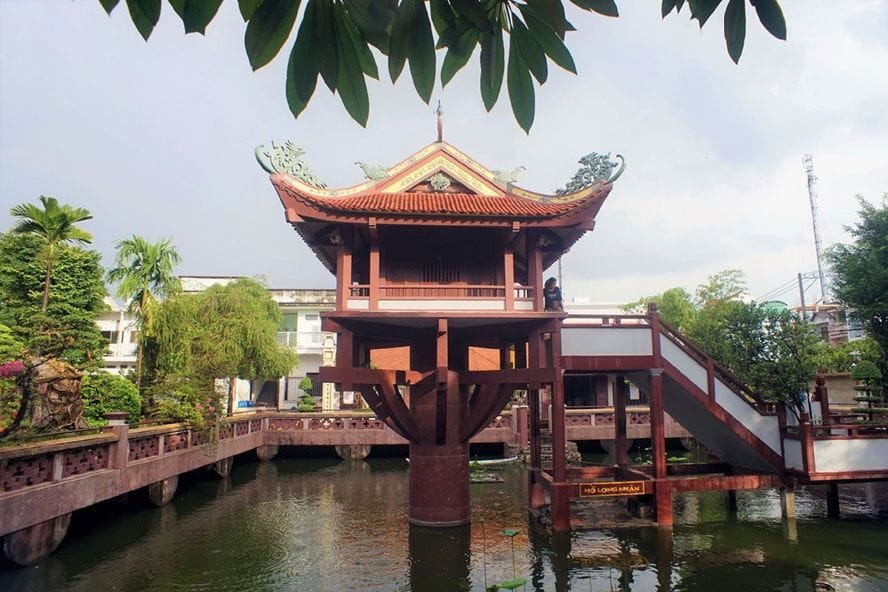
The architecture of the One Pillar Pagoda is a masterclass in balance and symbolism. The entire structure, which resembles a lotus bud, is just 4 meters (13 feet) high, making it one of the smallest pagodas in Vietnam. Yet its impact is outsized. The temple rests on a single stone pillar, 1.25 meters in diameter, which rises from the center of a rectangular lotus pond. The pillar is topped with a wooden frame that supports the temple's curved roof, adorned with dragon finials and intricate carvings of lotus motifs.
What strikes you first is the illusion of weightlessness. The pagoda seems to float above the water, its reflection shimmering like a twin lotus bloom. The wooden structure is painted in traditional hues of red and gold, colors that symbolize good fortune and spiritual awakening in Buddhist culture. Inside, a small altar houses a statue of Guanyin, the goddess of mercy, her gentle gaze offering solace to all who enter. The interior is intimate, barely enough for one person to kneel and pray, reinforcing the sense of personal connection to the divine.

The lotus pond itself is integral to the design. In Buddhism, the lotus represents purity emerging from muddy waters, a metaphor for spiritual enlightenment. The planting of water lilies and the presence of koi fish add life and movement to the scene. The entire complex is a microcosm of Buddhist philosophy: simplicity, resilience, and the beauty of rising above worldly attachments. As you circle the pond on the stone path, take a moment to appreciate the craftsmanship. The pagoda's construction, using only wooden joinery without a single nail, is a testament to the skill of ancient Vietnamese artisans.
Spiritual Significance: A Pilgrimage of the Heart
For many Vietnamese, the One Pillar Pagoda is more than a historical relic; it is a living sanctuary. Locals come here to pray for children, health, and good fortune, carrying on a tradition that spans generations. The pagoda is particularly associated with fertility and motherhood, due to its origin story. Women often light incense and make offerings, hoping for the blessings of Guanyin, who is considered a protector of women and children.
The spiritual atmosphere is palpable. Even if you are not Buddhist, you can feel the weight of centuries of devotion clinging to the wooden walls. The sound of chanting monks from the nearby Buddhist temple complex, the soft rustle of tourists whispering in awe, and the occasional flutter of a bird's wings create a meditative ambiance. It is a place where time seems to slow down, where you can breathe deeply and reflect on your own journey.

One of the most moving moments is to see elderly women, dressed in traditional ao dai, bowing before the altar with tears in their eyes. Their faith is a reminder of the human capacity for hope. Whether you are seeking answers, peace, or simply a beautiful photograph, the Chùa Một Cột offers a space for contemplation. It invites you to leave your worries at the gate and step into a realm of quietude.
Visiting Tips and Reflections: Making the Most of Your Visit
If you are planning a trip to Hanoi, the One Pillar Pagoda is a must-include on your itinerary. Located within the larger complex of the Presidential Palace and Ho Chi Minh's Mausoleum, it is easily accessible. The best time to visit is early morning, just after it opens at 7:30 AM, to avoid the crowds and experience the pagoda in the soft morning light. The entrance is free, but remember to dress respectfully—cover your shoulders and knees as a sign of respect.
Take your time to explore the surrounding gardens, which include a bonsai collection and a small museum dedicated to the pagoda's history. After your visit, you can walk to nearby attractions like the Ho Chi Minh Mausoleum or the Temple of Literature. For a truly immersive experience, consider joining a guided tour that includes Chùa Một Cột and other spiritual sites in Hanoi. A local guide can share stories and details that you might otherwise miss.

As I left the One Pillar Pagoda, I felt a quiet sense of peace. The city's roar seemed distant, and the lotus image stayed with me. It reminded me that even in the midst of chaos, we can find beauty and stillness. Hà Nội is a city of contrasts, and the Chùa Một Cột is one of its most profound. It is a lotus flower that has bloomed for a thousand years, and it waits patiently to share its wisdom with every traveler who pauses long enough to listen.